
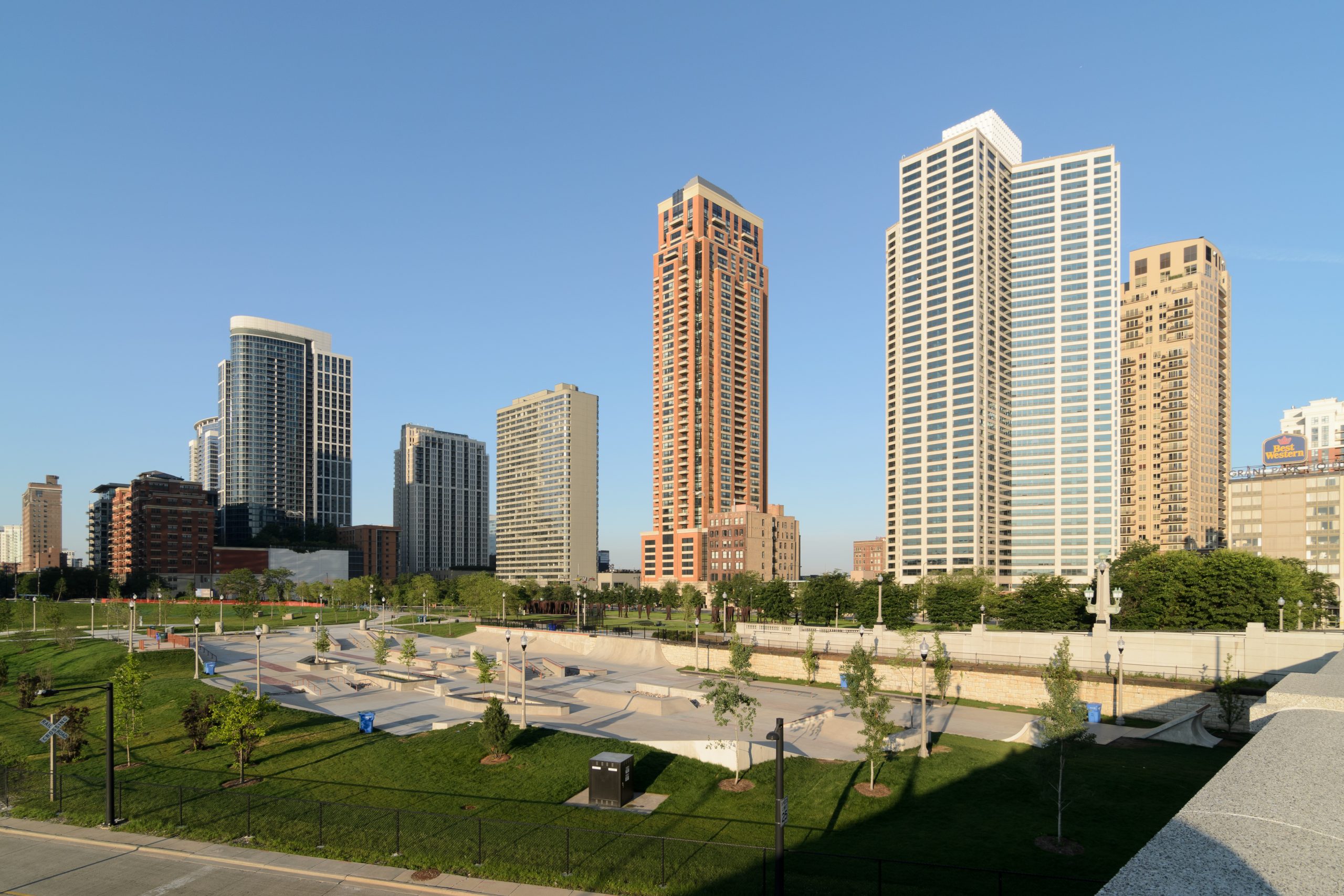
South Loop, Chicago, Illinois
Managed IT Services, Cybersecurity & Business Technology Consulting for the South Loop’s Creative, Educational, Convention & Development Community
The South Loop is Chicago’s most actively transforming neighborhood — a district whose identity has been shaped by successive waves of reinvention, from the railroad yards and printing houses of the 19th century to the loft conversions and university campuses that defined its 20th-century character, and now to the most ambitious development program in the city’s recent history. Bounded by Ida B. Wells Drive to the north, the Stevenson Expressway to the south, Lake Michigan and the Museum Campus to the east, and the South Branch of the Chicago River and the Dan Ryan Expressway to the west, the South Loop encompasses Printers Row — the historic printing district whose converted warehouse buildings now house creative organizations, residential lofts, and office space along Dearborn Street — the university campuses and creative college facilities that make the South Loop one of Chicago’s most concentrated higher education corridors, the 2.6-million-square-foot McCormick Place convention campus that is the largest convention center in North America, the Wintrust Arena entertainment venue, and the Soldier Field stadium complex on the Museum Campus edge.
And at the center of the South Loop’s next chapter: The 78 — Related Midwest‘s 62-acre development along the South Branch of the Chicago River between Roosevelt Road, Clark Street, and 16th Street, whose groundbreaking for the Chicago Fire FC‘s new $750 million, 22,000-seat, privately funded soccer stadium took place on March 3, 2026. Designed by Gensler with Related Midwest as master developer, the open-air, natural grass stadium — funded entirely by team owner and Morningstar founder Joe Mansueto without public dollars — is targeted to open for the 2028 MLS season and will anchor the commercial, office, sports and entertainment, and residential development that will make The 78 Chicago’s 78th official neighborhood. The construction program underway right now — with Pepper Construction, GMA Construction Group, and ALL Construction Group as the building contractors — is the largest South Loop development in decades and will define the district’s commercial character for the next generation.
Lionhive provides Managed IT Services, Cybersecurity & Compliance, FERPA-aligned student data governance, event-scale connectivity, cloud and digital transformation, and vCIO Advisory to the creative and media agencies, educational and academic organizations, hospitality and convention-adjacent businesses, legal and professional services firms, and technology companies operating across the South Loop’s historic lofts, contemporary office buildings, and the new commercial environment emerging around The 78.
The South Loop doesn’t fit a single category — it’s a live-work-learn-develop district whose businesses range from independent creative agencies in 1906 Printers Row loft buildings to the professional services firms supporting a $750 million stadium construction program. The technology challenges of a district this varied require a provider who can address legacy building connectivity, FERPA student data governance, McCormick Place event-scale infrastructure, and the construction ecosystem IT requirements of a multi-year mega-development — not a single-industry specialist or a generic managed services package.
Columbia College Chicago & the Education Corridor
Columbia College Chicago — one of the South Loop’s largest commercial landowners, holding ownership or leases across approximately 20 buildings in the area bounded by Ida B. Wells Drive, State Street, Roosevelt Road, and Michigan Avenue — is a private, nonprofit college serving nearly 7,000 students in more than 60 undergraduate and graduate programs in creative and media arts, liberal arts, and business. Columbia College occupies some of the South Loop’s most architecturally significant buildings, including the 1906 Michigan Avenue Main Building — originally built for the American Book Company as a printing and distribution facility whose frame was designed to withstand the weight and vibration of heavy printing presses — that exemplifies the historic loft stock that defines Printers Row’s built environment. Roosevelt University adds another significant student population and academic administrative presence to the South Loop’s education corridor, with DePaul University’s downtown campus nearby at the Loop boundary.
Columbia College’s creative and media arts curriculum — spanning cinema and television production, music, communication, journalism, and arts administration — generates a commercial ecosystem of creative production companies, media organizations, film and video production studios, and the arts-adjacent professional services firms that the South Loop’s graduate and alumni community supports. This is the practical Lionhive market in the South Loop’s education corridor — not the universities themselves, whose scale supports internal IT departments, but the production companies, creative agencies, arts administration organizations, and educational support businesses that operate around Columbia College’s campus and draw their talent and leadership from its alumni network.
Educational organizations managing student records in the South Loop’s private school, tutoring, and educational services ecosystem face FERPA compliance obligations for student educational records — governing the access controls, data governance, and breach notification procedures that protect student information regardless of the organization’s size. The Protection of Pupil Rights Amendment (PPRA) adds specific protections for student personal information in federally funded survey and data collection contexts. Educational technology vendors whose platforms are used by South Loop schools or their students handle protected student information that creates compliance obligations under both frameworks. Lionhive provides FERPA-aligned managed IT for South Loop’s educational services community — secure student record management on Microsoft 365 Education and Google Workspace for Education, student information system consulting for PowerSchool and Skyward platforms, and the data governance controls that protect student records across the South Loop’s educational services organizations.
Printers Row — Creative Agencies, Media & Legacy Building Connectivity
Printers Row is the South Loop’s most historically textured commercial corridor — a stretch of Dearborn Street whose former printing houses, publishing warehouses, and manufacturing lofts now house creative agencies, design studios, software development companies, media organizations, and the boutique professional services firms that the neighborhood’s affordable-relative-to-River-North character attracts. Dearborn Station — the oldest surviving train station in Chicago, built in 1885 and now converted to retail and office space at the southern anchor of Printers Row — is the architectural centerpiece of the district. Columbia College’s former Lakeside Press Building and the buildings that once housed the American Book Company now accommodate the creative and media organizations whose work continues the district’s relationship with storytelling, publishing, and communication in digital rather than physical form.
The technology challenge specific to Printers Row is genuine and consistently underserved — buildings designed in the 1890s and 1900s for heavy industrial printing equipment and railway freight were built with the physical infrastructure of that era, not the data cabling and electrical capacity that modern creative agencies operating with terabyte-scale media file environments, cloud collaboration tools, and video production workflows require. Legacy wiring, inadequate electrical panels, and the physical challenges of installing fiber in masonry buildings with 100-year-old internal structures create connectivity problems that a standard cable modem installation doesn’t solve. Lionhive designs and implements high-performance connectivity for South Loop’s historic loft buildings — enterprise-grade wireless with appropriate access point density and placement for open-floor industrial loft environments, fiber installation working within historic building constraints, and 5G fixed wireless as a primary or failover option where traditional fiber runs are cost-prohibitive. Redundant connectivity architecture with fiber primary and 5G failover ensures creative agencies in Printers Row lofts have the connectivity reliability their production workflows require regardless of what happens to a single carrier.
Creative agencies handling client brand assets, campaign creative, consumer behavioral data, and digital advertising analytics in Printers Row face the same privacy compliance obligations as their River North and Design District counterparts — CCPA/CPRA for California consumer data in digital campaigns, GDPR for EU resident data handled in international client programs, and the SOC 2 Type II certification that enterprise client procurement increasingly requires. For production companies and media organizations working with Columbia College faculty, alumni, and the broader Chicago creative ecosystem, secure asset storage and collaborative production infrastructure on Microsoft 365 or Google Workspace with appropriate sensitivity controls for client-confidential creative work is the foundational technology governance requirement that generic IT support routinely fails to address at the depth creative organizations need.
McCormick Place & the Convention Hospitality Ecosystem
McCormick Place is the largest convention center in North America — 2.6 million square feet of exhibition, meeting, and event space that hosts hundreds of trade shows, conventions, and corporate events annually, drawing millions of business travelers and conference attendees whose accommodation, dining, and service needs are met by the South Loop’s hospitality community. The convention ecosystem generates an event-scale technology challenge for the surrounding hospitality and retail businesses that has no parallel in most Chicago neighborhoods — the difference between a quiet mid-week period and a peak convention week can mean thousands of simultaneous additional guests demanding reliable connectivity, payment processing, and service technology across every nearby hotel and restaurant simultaneously.
PCI DSS compliance for South Loop hospitality payment environments governs the payment card infrastructure serving convention attendees across hotel check-in, restaurant, bar, and event-space payment terminals. Network segmentation between cardholder data environments and guest Wi-Fi is a specific PCI requirement whose failure creates both compliance exposure and the security vulnerability that puts convention-attending executives’ payment card data at risk on shared networks. International convention attendees from EU member states create GDPR compliance obligations for the personal data that McCormick Place-area hotels process in connection with conference registration, loyalty programs, and marketing follow-up. Lionhive provides PCI-compliant managed IT for South Loop’s convention hospitality community — payment environment security, enterprise wireless architected for peak convention-period concurrent user loads, unified communications infrastructure for large hotel operations, and 24/7 monitoring that catches network issues before the convention rush hits rather than during it.
The 78 & the Development Ecosystem
The Chicago Fire FC stadium groundbreaking on March 3, 2026 — a $750 million privately funded construction program at The 78, with Gensler as lead architect and a three-way construction partnership delivering a 22,000-seat open-air soccer stadium targeting completion for the 2028 MLS season — is the most significant development event in the South Loop since McCormick Place’s last major expansion. The 78’s 62-acre riverfront site is designed to become a complete mixed-use neighborhood incorporating the stadium, retail and dining, office space, sports and entertainment venues, and residential development that will transform the South Loop’s western riverfront boundary over the next decade.
The construction program currently underway at The 78 creates an active technology and professional services market around the development itself — construction management organizations, architecture and engineering firms, legal and financial advisory practices, and technology vendors whose engagement with Related Midwest and the Chicago Fire FC’s development team constitutes a commercial ecosystem whose compliance requirements are those of enterprise real estate development and professional services. Construction management organizations on federal and publicly supported projects face CMMC 2.0 considerations where any Controlled Unclassified Information is involved. Architecture and engineering firms managing BIM models and design files for a landmark stadium project have the same large-format file cloud governance requirements as every other South Loop design firm — at significantly larger scale. Lionhive provides managed IT, cloud governance, and cybersecurity for the professional services and technology organizations engaged in The 78 development ecosystem.
For the technology companies and property management organizations that will eventually manage The 78’s commercial infrastructure — building access control systems, smart building networks, retail point-of-sale infrastructure, and the connectivity backbone of a multi-use neighborhood — Lionhive provides the network architecture design, security infrastructure planning, and managed services that get new commercial environments operational at enterprise standards from the first tenant’s first day rather than months into the lease.
Wintrust Arena, Museum Campus & Entertainment Technology
Wintrust Arena — the 10,000-seat multi-purpose arena at 200 East Cermak Road that serves as home to the DePaul Blue Demons basketball program and is a concert and event venue for the South Loop — and the surrounding Museum Campus entertainment district create a hospitality and retail technology environment whose peak demand periods are driven by event schedules rather than by seasonal patterns. The restaurants, bars, retail operations, and service businesses serving the Wintrust Arena and Museum Campus visitor population face the same event-scale connectivity and PCI compliance requirements as the McCormick Place hospitality corridor — with the additional consideration that Museum Campus venues including the Field Museum, Shedd Aquarium, and Adler Planetarium host visitor populations including international tourists, school groups, and research affiliates whose data handling creates the same multi-jurisdiction privacy law complexity as any high-volume venue serving a globally sourced visitor base.
Legal & Professional Services — Dearborn Station & South Loop Office Community
The professional services organizations operating from Dearborn Station’s converted office space, the South Loop’s Class A and B office buildings, and the commercial floors above Printers Row’s retail and creative space — law firms, accounting practices, financial advisory organizations, and management consulting firms — serve both the South Loop’s residential and educational community and the broader Chicago corporate client base. The legal practices supporting Columbia College, The 78’s development financing, McCormick Place event contracts, and the entertainment industry relationships of the South Loop’s creative community handle attorney-client privileged information subject to ABA Model Rule 1.6 confidentiality obligations and the Illinois State Bar Association‘s cybersecurity ethics guidance.
Illinois’s specific data protection obligations apply to every South Loop professional services organization handling Illinois residents’ personal information — the Illinois Personal Information Protection Act (PIPA) for breach notification, and the Illinois Biometric Information Privacy Act (BIPA) for any organization using fingerprint access systems, biometric time and attendance tracking, or facial recognition for facility security across the South Loop’s office and retail environments. Lionhive builds BIPA compliance programs for South Loop employers alongside the standard managed IT and cybersecurity infrastructure that professional services organizations require.
Core Services for South Loop Organizations
Managed IT Services — 24/7 proactive monitoring, patch management, backup validation, and SLA-backed helpdesk support for South Loop organizations across creative agencies, educational services, hospitality, entertainment, professional services, and development-related businesses. Support calibrated to the event-driven operating rhythm of a district anchored by McCormick Place and Wintrust Arena.
Historic Building Connectivity — Enterprise wireless infrastructure for Printers Row loft environments, 5G fixed wireless as primary or failover where fiber installation is cost-prohibitive in historic masonry buildings, and redundant connectivity architecture that ensures creative agencies in 1906 buildings have 2026 connectivity reliability.
FERPA & Student Data Compliance — FERPA-aligned data governance, student information system consulting for PowerSchool and Skyward, Microsoft 365 Education and Google Workspace for Education configuration, and the access controls and breach notification procedures that protect student records in South Loop’s educational services organizations.
PCI DSS & Convention Hospitality IT — Payment environment design and network segmentation for McCormick Place-area hotels and restaurants, enterprise wireless architected for peak convention-period loads, and 24/7 monitoring for payment processing systems serving high-volume event periods.
Cybersecurity & Compliance — FERPA, GDPR, CCPA, PCI DSS, BIPA, Illinois PIPA, ABA ethics rules, and NIST CSF 2.0 — integrated compliance programs for the South Loop’s diverse industry mix. Endpoint detection and response via CrowdStrike and SentinelOne, identity management through Microsoft Entra ID, 24/7 monitoring through Lionhive’s Managed SOC.
Cloud & Digital Transformation — Cloud infrastructure for creative media workflows, large-format file storage and collaboration for architecture and design firms engaged in The 78 development, and Microsoft 365 Copilot implementation with the governance controls that protect client-confidential creative and professional data.
Revenue Operations — Salesforce and HubSpot implementation for South Loop creative agencies and professional services organizations converting creative relationships and project pipelines into managed, measurable revenue infrastructure.
vCIO Advisory — Strategic technology leadership, IT roadmaps, and vendor management for South Loop organizations navigating the technology requirements of creative business growth, The 78 development ecosystem engagement, and the convention-scale infrastructure demands of a district in active transformation.
📞 Partner with Lionhive in the South Loop
The South Loop is mid-transformation — from Chicago’s most historically layered district of printing houses, rail yards, and industrial lofts into the live-work-learn-develop environment whose next chapter is being written right now at The 78’s construction site on the riverfront. The organizations making that transformation happen — the creative agencies in Printers Row lofts, the education-adjacent businesses around Columbia College, the hospitality community serving McCormick Place, the professional services firms supporting The 78’s development ecosystem — need a technology partner who understands every dimension of a district this varied. Lionhive serves the South Loop’s commercial community with the connectivity expertise, compliance depth, and strategic advisory that Chicago’s most actively evolving neighborhood requires. To discuss your IT, cybersecurity, or compliance requirements, contact us directly or book a strategy session.
👉 Book a South Loop Strategy Session
📞 +1 469 364 9010
Part of Lionhive’s Chicago, Illinois coverage — serving organizations across the South Loop, The Loop, West Loop, Streeterville, and throughout Chicago.