
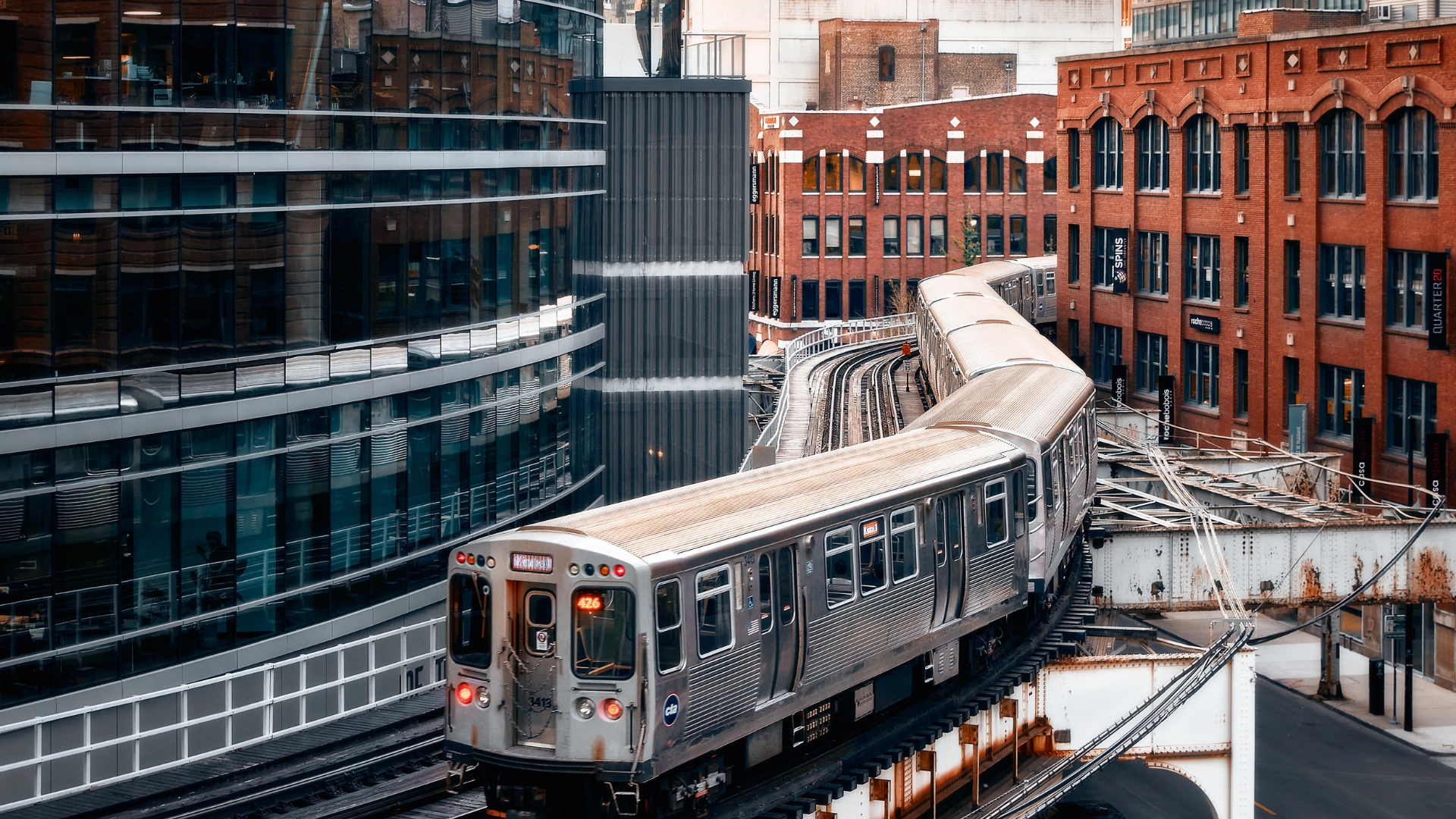
Printer’s Row, Chicago, Illinois
Managed IT Services, Creative Workflow Infrastructure & Educational Technology for Printer’s Row’s Professional, Academic & Creative Community
Printer’s Row occupies a precise and historically significant position on Chicago’s South Loop — bounded by Ida B. Wells Drive to the north, Polk Street to the south, Plymouth Court to the east, and the South Branch of the Chicago River to the west. The neighborhood’s identity is inseparable from its built environment: the landmark Printing House Row District, a National Register of Historic Places designation covering the concentration of late 19th and early 20th-century publishing and printing buildings whose architecture — designed by firms including Holabird & Roche and Howard Van Doren Shaw, and featuring the oversized windows that admitted the maximum light for typesetting and engraving — now houses one of Chicago’s most distinctive residential and professional communities. The Franklin Building at Dearborn and Polk, with its 1916 polychrome terracotta facade depicting bookbinders and typesetters and its tile mural commemorating the first printing of the Gutenberg Bible. The Transportation Building at 600 South Dearborn, converted to loft apartments. The M.A. Donohue Building at 711 South Dearborn. And anchoring the southern boundary of the district, Dearborn Station — the 1885 Romanesque Revival terminal with its 12-story clock tower, once serving 17,000 rail passengers per day, now housing retail, offices, the Jazz Showcase (in residence since 2008), and the South Loop Montessori School.
The commercial and institutional character of Printer’s Row in 2026 is shaped by two complementary communities: a dense and growing concentration of higher education institutions whose student populations generate specific residential, retail, and educational technology requirements; and the creative, professional, and residential community of lawyers, designers, architects, writers, and knowledge workers who have made Printer’s Row’s century-old loft conversions some of Chicago’s most sought-after addresses. Roosevelt University, Columbia College Chicago (which owns Dwight Lofts and 731 South Plymouth Court as student housing and whose academic programs in film, media arts, design, and journalism generate specific creative technology requirements), DePaul University’s Loop Campus, the UIC John Marshall Law School, and Robert Morris University collectively make Printer’s Row one of Chicago’s most concentrated higher education corridors — with the University Center of Chicago housing more than 3,000 college students in a single building. Jones College Prep and the British International School serve the neighborhood’s growing professional residential community.
Lionhive provides Managed IT Services, Creative Workflow Infrastructure, Educational Technology Support, Cloud Governance, Cybersecurity & Compliance, and vCIO Advisory to Printer’s Row’s creative agencies, architecture and design practices, legal and professional services firms, educational support organizations, and the residential property managers and commercial operators whose buildings form the Printing House Row District’s historic commercial inventory.
Every business operating from a Printer’s Row loft conversion faces the same foundational tension: the architectural character that makes the space worth occupying — the exposed brick, timber beams, cast-iron columns, and oversize windows that admitted light for 19th-century typesetting — is structurally incompatible with the cable pathways, wireless propagation requirements, and power infrastructure that 21st-century creative and professional workflows demand. The buildings were designed for Linotype machines and letterpress operations, not for 10Gb network switches and cloud rendering workloads. Retrofitting them without compromising their character is a specific technical discipline that generic IT vendors don’t have and that Printer’s Row businesses consistently need.
Creative Agencies, Design Firms & the Large-File Workflow Problem
Printer’s Row’s professional creative community — the branding agencies, graphic design studios, architecture practices, and media production organizations that have made its converted printing plant lofts their home — generates the same large-file workflow requirements that define River West’s creative community, deployed in buildings whose infrastructure constraints are, if anything, more pronounced. Where River West’s warehouses were built for industrial manufacturing, Printer’s Row’s buildings were built for printing operations — similarly heavy industrial use, similarly legacy electrical systems, similarly thick masonry construction, and equally incompatible with the network infrastructure assumptions of modern managed IT deployments.
A design studio handling 4K video production, motion graphics, and large-format print assets needs storage throughput, rendering workstation capability, and cloud delivery infrastructure that standard business connectivity cannot support. An architecture practice running Revit BIM workflows and parametric modeling on large-scale building projects generates file sizes and concurrent access patterns that a shared cloud storage environment without adequate throughput architecture will fail under. The creative professionals who have specifically chosen Printer’s Row for its historic character and proximity to the Loop’s institutional client base are not operating standard office workloads — and their IT infrastructure requirements reflect that.
Lionhive designs and deploys high-performance creative workflow infrastructure for Printer’s Row’s design and architecture community: on-premises NAS storage with the throughput and RAID architecture appropriate for concurrent multi-user access to large creative files; 10Gb LAN backbones where building infrastructure supports the cabling; enterprise wireless architectures deploying Cisco or Ubiquiti UniFi access points positioned through RF survey analysis to address the specific signal challenges of masonry construction; and hybrid cloud delivery — Azure or AWS with content delivery acceleration — that extends the creative team’s access to large files beyond the office without the latency that undermines real-time collaboration.
For creative agencies and design firms whose client base has grown to include enterprise and institutional clients — the law firms, financial institutions, and corporate headquarters in the adjacent Loop whose procurement processes now routinely require vendor SOC 2 Type II attestation — Lionhive builds the security governance programs that allow Printer’s Row creative firms to satisfy vendor security questionnaire requirements and compete for the engagements their creative quality merits.
The Academic Community — Columbia College, Roosevelt & Educational Technology
The higher education institutions concentrated in and adjacent to Printer’s Row — Columbia College Chicago, Roosevelt University, DePaul’s Loop Campus, UIC Law School, and Robert Morris University — create a technology environment whose requirements span academic data governance, student information system administration, and the creative technology infrastructure that Columbia College’s film, media arts, graphic design, and journalism programs specifically demand. Columbia College’s ownership of student housing buildings within Printer’s Row — Dwight Lofts and 731 South Plymouth Court — and its 16 to 17 campus buildings concentrated in the South Loop create a technology footprint whose managed IT requirements extend from student-facing residential infrastructure to academic and administrative systems.
Student data governance under FERPA (the Family Educational Rights and Privacy Act) — the federal law governing educational records privacy — applies to every institution in Printer’s Row’s higher education community. FERPA requires that educational records be protected from unauthorized disclosure, that students have the right to inspect and amend their records, and that institutions implement the access controls, audit logging, and breach notification procedures that protect student data from unauthorized access. For the smaller educational support organizations, tutoring centers, and professional development organizations serving Printer’s Row’s large student population, FERPA-aligned data governance is an active compliance requirement, not a best-practice recommendation.
The annual Printers Row Lit Fest — held each June along Dearborn Street since 1985, drawing up to 150,000 attendees across two days, with C-SPAN broadcasting from the event — brings the neighborhood’s literary identity to national visibility each summer, generating the temporary high-density connectivity and payment infrastructure requirements that characterize major outdoor events in urban settings. Lionhive provides event technology consulting for Printer’s Row’s commercial community around peak event periods.
Legal & Professional Services — The Loop Adjacency Advantage
Printer’s Row’s residential and professional community has evolved significantly over the past two decades. The neighborhood that in the 1970s housed artists, photographers, and writers — drawn by the affordable converted printing plant lofts — now attracts the lawyers, investment bankers, financial professionals, and knowledge workers who have replaced the creative pioneers as the dominant residential demographic. This demographic shift reflects Printer’s Row’s commercial proximity to the Loop’s legal and financial district — a short walk or quick Red Line ride from the firm offices where many Printer’s Row residents work, and where many of the professional services organizations operating from Printer’s Row commercial space serve their clients.
Law firms, accounting practices, and financial advisory organizations operating from Printer’s Row commercial space face the same cybersecurity and compliance requirements as their peers in the Loop and Streeterville — client data protection obligations under professional ethics rules, the vendor security questionnaire requirements of their institutional clients, and the NIST CSF 2.0-aligned security programs that demonstrate professional services firms take the protection of confidential client information seriously. The Illinois Biometric Information Privacy Act (BIPA) creates compliance obligations for any Printer’s Row professional services organization using biometric access control, fingerprint time-tracking, or similar systems — with $1,000 to $5,000 per-violation statutory damages and a private right of action that has produced significant class action litigation against Illinois employers.
Historic Building Connectivity — Printer’s Row’s Defining IT Challenge
The Printing House Row District’s landmark status — which has protected its architectural character and made it one of Chicago’s most distinctive commercial and residential environments — creates specific and persistent IT infrastructure constraints that every business and resident operating from these buildings encounters. The oversized windows that admitted maximum light for 19th-century typesetting now create thermal challenges for server equipment. The masonry load-bearing construction that defined the buildings’ structural integrity creates the radio frequency attenuation challenges that make enterprise wireless design in these environments a specialist skill. The absence of modern cable riser infrastructure means that structured cabling deployments must be engineered around existing building pathways rather than through them.
Lionhive’s approach to Printer’s Row loft infrastructure combines RF survey-based wireless design — mapping signal propagation through the specific masonry and structural characteristics of each building before any access point is placed — with structured cabling solutions that work within the aesthetic and structural constraints of landmark-protected spaces. Where the building’s historic character limits traditional cabling approaches, Lionhive deploys fiber-to-the-floor solutions through existing conduit and riser paths, supplemented by high-density enterprise wireless that provides the throughput that creative and professional workloads require. The result is enterprise-grade network performance from infrastructure that respects the building’s historic character rather than compromising it.
Core Services for Printer’s Row Organizations
Creative Workflow Infrastructure — High-throughput NAS storage, 10Gb LAN where building infrastructure supports it, hybrid cloud delivery for large creative files, and workstation specification and deployment for Adobe Creative Cloud, Revit, and media production applications. Built for the actual file size and throughput requirements of design and architecture workflows, not for standard office productivity use cases.
Historic Building Connectivity — RF survey-driven enterprise wireless design for masonry and cast-iron construction, structured cabling through existing building pathways, and fiber/5G hybrid solutions that produce enterprise-grade connectivity from the physical constraints of Printing House Row District buildings.
Managed IT Services — 24/7 monitoring, patch management, backup validation, and helpdesk support for Printer’s Row creative agencies, professional services firms, educational support organizations, and commercial property operators. Support calibrated to the working patterns of creative and professional communities — not exclusively 9-to-5 coverage.
FERPA & Educational Data Governance — Student data governance frameworks, access controls, and audit logging for educational organizations serving Printer’s Row’s large student population. FERPA-compliant data management that satisfies both institutional policy and federal regulatory requirements.
Cybersecurity & Compliance — Illinois BIPA compliance programs, SOC 2 Type II readiness, NIST CSF 2.0-aligned security programs, endpoint detection and response via CrowdStrike and SentinelOne, identity management through Microsoft Entra ID, and 24/7 monitoring through Lionhive’s Managed SOC.
vCIO Advisory — Strategic technology leadership and IT roadmap planning for Printer’s Row creative firms and professional services organizations whose growth trajectory requires technology infrastructure planning rather than reactive IT management.
📞 Partner with Lionhive in Printer’s Row
Printer’s Row’s historic loft buildings, dense academic community, and growing professional residential population create a technology environment whose requirements are as specific as its architecture. The creative agencies, architecture firms, professional services organizations, and educational support businesses operating from the Printing House Row District deserve IT infrastructure that matches the quality of the spaces they occupy and the clients they serve. Lionhive provides the loft connectivity expertise, creative workflow infrastructure, and compliance capability that Printer’s Row’s community requires. To discuss your IT or cybersecurity requirements, contact us directly or book a strategy session.
👉 Book a Printer’s Row Strategy Session
📞 +1 469 364 9010
Part of Lionhive’s Chicago, Illinois coverage — serving organizations across Printer’s Row, South Loop, The Loop, and throughout Chicago.